Custom accent tables can add useful surface space, storage, and visual interest without requiring a major change to a room. Designed around specific dimensions, materials, and interior styles, these smaller furniture pieces can solve practical needs while helping the surrounding space feel more complete.
From side tables beside a sofa to bedside tables, entryway pieces, drink tables, and decorative statement furniture, a custom accent table can be built around how and where you plan to use it.
Key Takeaways
- Custom accent tables can be sized specifically for sofas, chairs, beds, entryways, and other furniture.
- Height, width, depth, and placement should be determined before choosing decorative details.
- Accent tables can provide storage, display space, charging access, or simply a convenient surface.
- Materials and finishes can be selected to complement existing furniture and cabinetry.
- Small or unusually shaped spaces may benefit especially from custom dimensions.
- A custom table can either blend into the room or serve as a deliberate statement piece.
- Function should guide the design before style, hardware, or decorative details are finalized.
What Makes a Custom Accent Table Different?
A standard accent table is manufactured in predetermined dimensions and finishes.
A custom accent table begins with your space.
Its height can be coordinated with a particular sofa or bed, its width can be designed around an unused wall, and storage can be incorporated specifically for the items you need nearby.
| Custom Accent Table | Ready-Made Accent Table |
|---|---|
| Designed around specific dimensions | Available in standard sizes |
| Materials can be selected | Limited to available finishes |
| Storage can be personalized | Uses a fixed configuration |
| Can complement existing furniture | May only approximately match |
| Works well in unusual spaces | Best suited to conventional layouts |
| Can become a one-of-a-kind feature | Produced for broader use |
A ready-made table may be perfectly suitable when the dimensions and style already work.
Customization becomes more useful when fit, function, or appearance requires greater precision.
Why Choose a Custom Accent Table?
Accent tables are small compared with many other pieces of furniture, but their placement makes their dimensions surprisingly important.
A table that is too tall beside a sofa can feel awkward to use. One that is too wide may interfere with walking space, while a table that is too small may not provide enough surface area.
Custom design allows these proportions to be planned around the surrounding furniture.
It also gives homeowners greater control over storage, materials, shape, and finish.
Choose the Right Accent Table for the Room
Different rooms create different requirements.
| Room | Accent Table Type | Useful Features |
|---|---|---|
| Living room | Side or end table | Surface space, drawers, shelves |
| Bedroom | Bedside table | Drawer storage, charging access |
| Entryway | Narrow accent table | Display surface, keys, small storage |
| Reading area | Chairside table | Space for books, drinks, lighting |
| Home office | Small side table | Printer, supplies, accessories |
| Entertainment room | Drink or side table | Compact surface near seating |
| Guest room | Bedside accent table | Lamp, phone, personal items |
Thinking about what the table needs to do makes it easier to determine the appropriate size and configuration.
Custom Side Tables for Living Rooms
Side tables are among the most common accent tables.
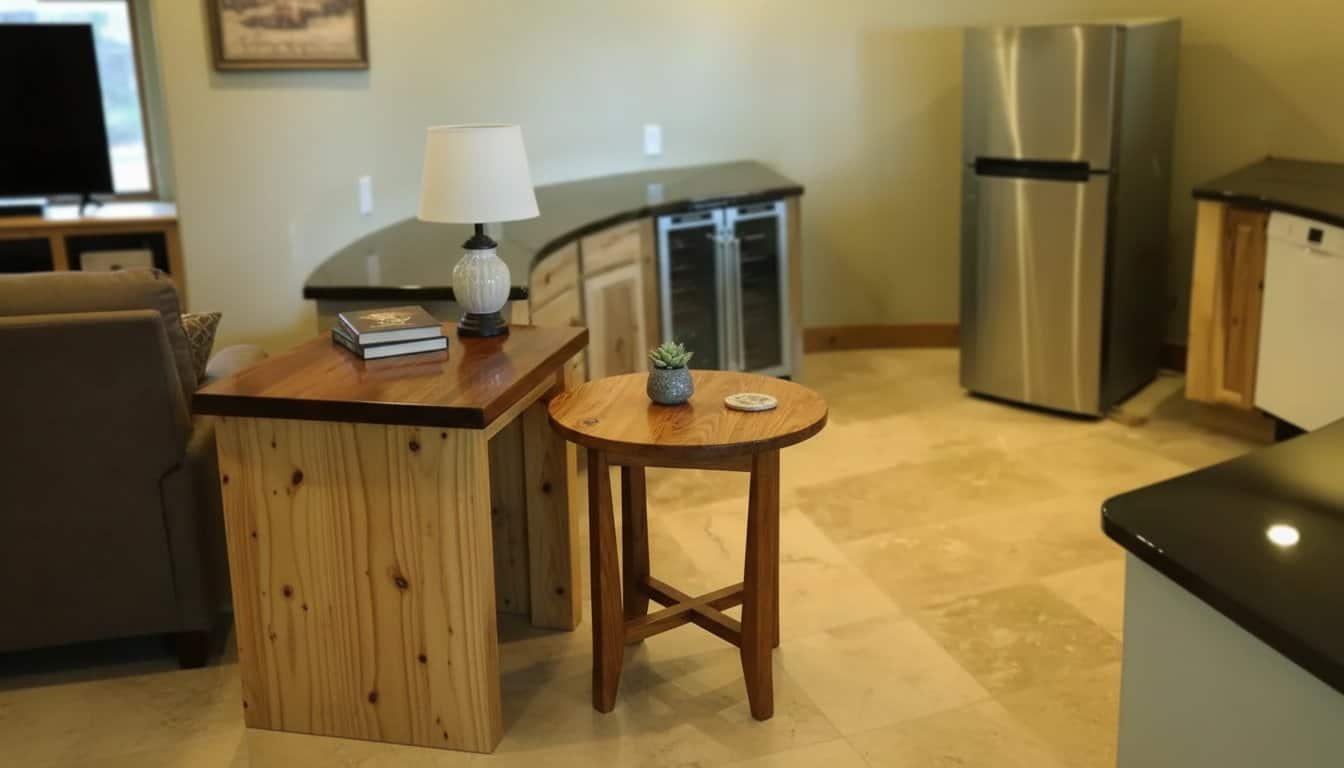
They are typically positioned beside sofas, sectionals, recliners, or lounge chairs to provide a convenient surface for drinks, lamps, books, remotes, and other items.
The height should relate to the nearby seating so users do not need to reach excessively upward or downward.
Width also matters.
A large table may offer more storage, but it can make the seating area feel crowded if floor space is limited.
Accent Tables for Reading Nooks
A reading chair becomes more functional when there is somewhere nearby to place a drink, book, reading glasses, or lamp.
A compact custom table can be designed specifically around the chair and available floor space.
This can be particularly useful in corners or small reading areas where a standard end table would be too large.
The table does not need extensive storage.
For many reading spaces, a simple surface and small shelf are enough.
Use Accent Tables in Entertainment Spaces
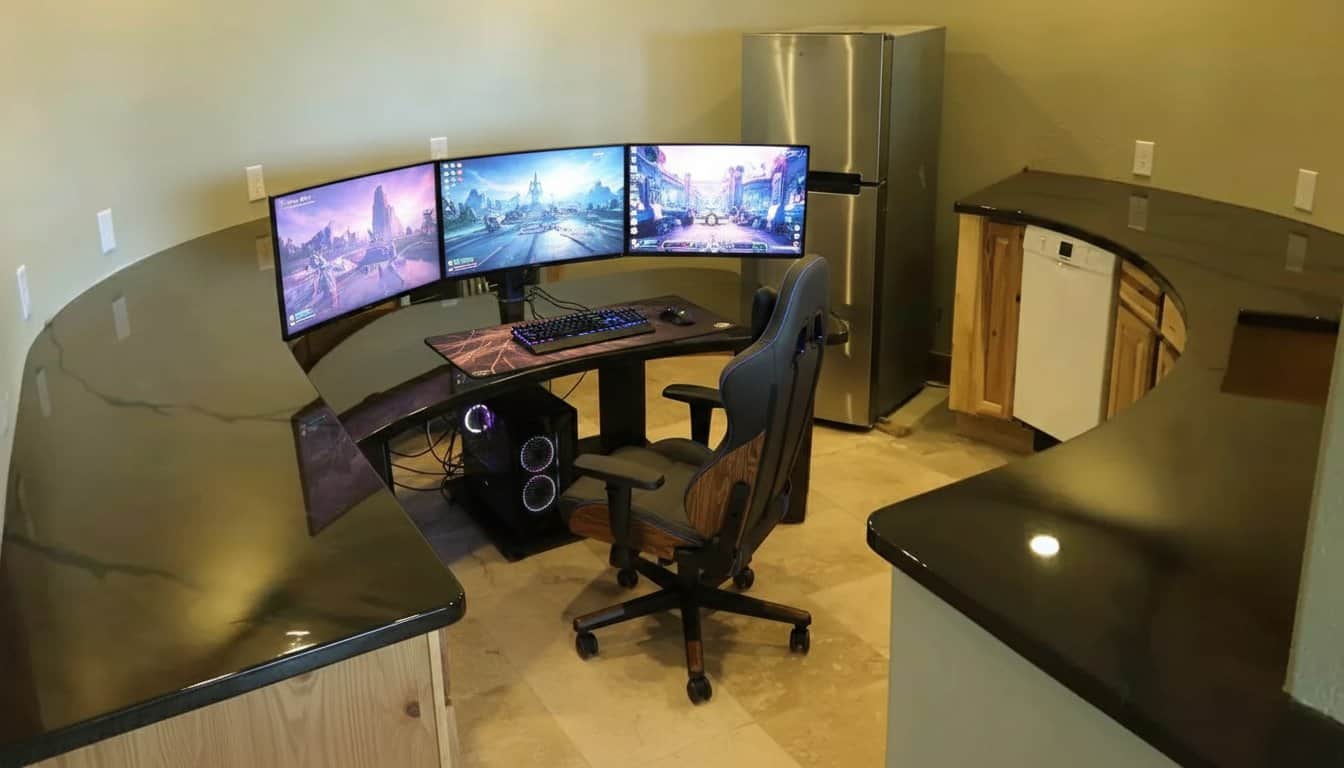
Man caves, media rooms, gaming areas, and home theaters also benefit from smaller tables.
Instead of relying entirely on a large coffee table, individual accent tables can give each seating position convenient access to drinks, remotes, controllers, and snacks.
Smaller tables can also make furniture layouts more flexible because they are easier to position around recliners, sectionals, and lounge seating.
Their design can coordinate with larger custom furniture throughout the entertainment space.
Accent Table vs. Coffee Table
Accent tables and coffee tables often appear in the same room but serve different purposes.
| Accent Table | Coffee Table |
|---|---|
| Usually placed beside furniture | Usually placed in front of seating |
| Smaller footprint | Larger surface |
| Often serves one or two people | Serves the entire seating area |
| Easy to use for individual items | Useful for shared items |
| Can fill narrow spaces | Requires more open floor area |
| May include small-scale storage | Can provide larger storage |
Many living rooms benefit from using both rather than choosing one or the other.
Accent Table vs. Console Table
The distinction between an accent table and console table can sometimes be unclear.
Console tables are generally longer and narrower and are commonly positioned against a wall or behind a sofa.
Accent tables are usually smaller and may be placed directly beside seating.
If you have an especially narrow wall or hallway, a console-style custom table may provide more surface space without extending too far into the room.
Choosing Width and Depth
Accent tables should provide useful surface area without interfering with movement.
Depth becomes especially important in narrow rooms.
A deep table placed beside a sofa may extend too far into a walkway, while a very narrow table might not hold the items you intend to use.
Before choosing dimensions, consider what will regularly sit on the surface.
A table intended only for a drink and remote requires less room than one that will support a lamp, books, and decorative objects.
Coordinate Accent Tables With Other Custom Tables
Homeowners planning several custom pieces may benefit from developing them as a coordinated furniture collection.
For example, living-room end tables and a coffee table might use similar materials or construction details while maintaining different dimensions and functions.
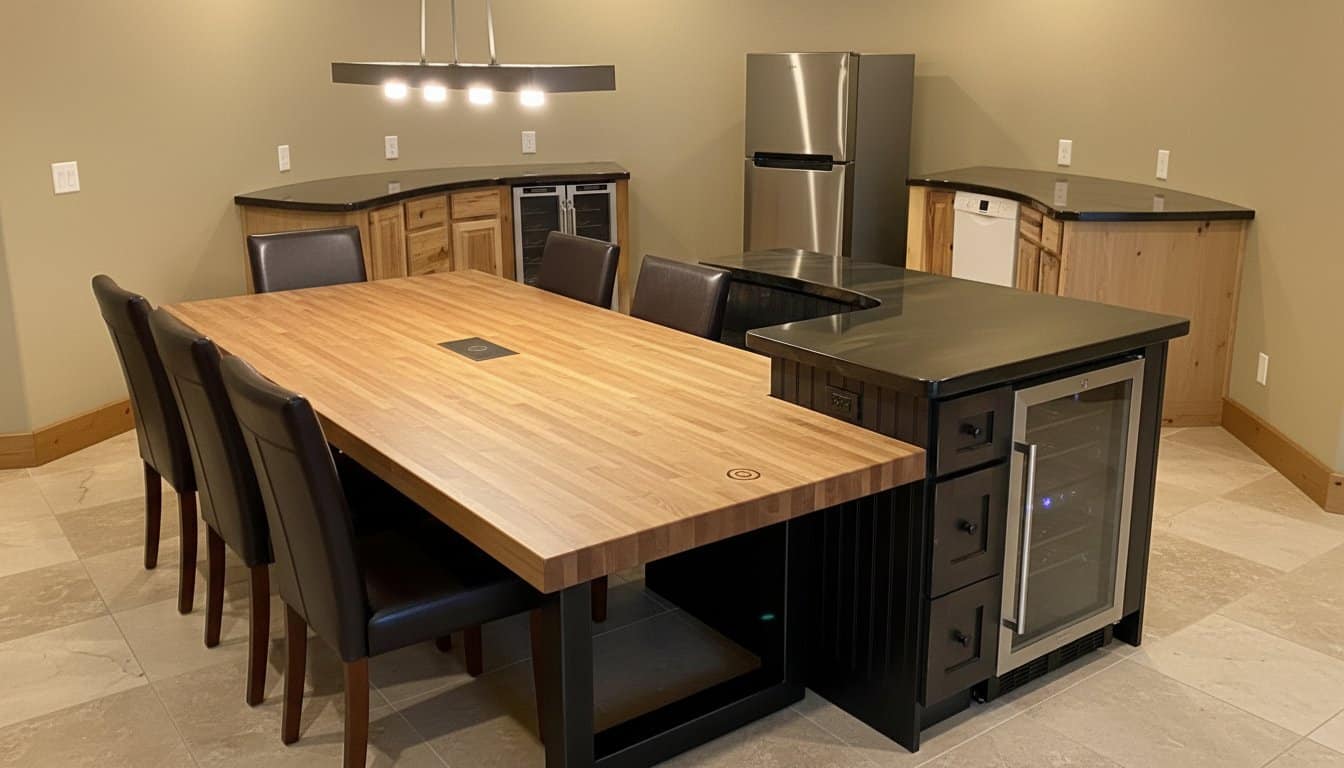
Dining, game, and entertainment tables can also share design elements across connected spaces.
Explore additional options through Custom Tables to see how different table types can be designed around specific rooms and uses.
Incorporating Accent Tables Into Rustic Interiors
Rustic interiors often emphasize natural materials, visible wood character, and substantial furniture forms.
A custom accent table can complement that style without becoming overly heavy.
Natural wood tones, straightforward construction, and textures that coordinate with existing finishes may work particularly well.
The exact design should still reflect the size and proportions of the room.
Accent Tables for Modern Interiors
Modern accent tables generally benefit from clean proportions and restrained detailing.
Simple lines can allow the material and craftsmanship to provide visual interest without relying on excessive ornamentation.
Custom construction is particularly valuable when homeowners want minimalist furniture that fits a specific wall or seating arrangement precisely.
The result can feel integrated rather than simply purchased to fill available space.
Accent Tables for Traditional Interiors
Traditional interiors may use more detailed shapes, furniture profiles, or finishes.
An accent table can reference existing trim, cabinetry, or furniture without needing to reproduce every detail exactly.
Proportion remains important.
Even a decorative traditional table should remain practical within the room and leave enough space for movement.
Custom Accent Tables in Loveland, Colorado
Homeowners looking for personalized woodworking can benefit from working with a builder who can design furniture around their actual room and requirements.
Man Caves and More provides custom woodworking services for homeowners in Loveland and surrounding areas, including tables and other personalized furniture solutions.
For more information about local woodworking services, visit Custom Woodworking Services in Loveland, CO.
Frequently Asked Questions About Custom Accent Tables
What is a custom accent table?
A custom accent table is a smaller furniture piece designed to specific dimensions, materials, storage needs, and visual preferences rather than being purchased in a standard manufactured size.
Where can accent tables be used?
Accent tables can be used beside sofas and chairs, next to beds, in entryways, reading areas, offices, entertainment spaces, and other areas where a compact surface or additional storage is useful.
How tall should an accent table be next to a sofa?
The appropriate height depends on the sofa or chair beside it. Measuring the arm height and considering how the table will be used provides a better starting point than relying on a universal dimension.
Can a custom accent table include storage?
Yes. Drawers, shelves, cabinets, and other storage features can be incorporated depending on the table size and intended use.
Are custom accent tables good for small spaces?
Yes. Custom dimensions can be especially useful in small rooms because the table can be built only as large as necessary instead of relying on standard furniture sizes.
Can an accent table be designed to match existing furniture?
Yes. Materials, finishes, proportions, and design details can be selected to coordinate with nearby furniture, cabinetry, flooring, or other features.
What is the difference between an accent table and an end table?
An end table is a type of accent table typically positioned at the end of a sofa or beside seating. The term accent table is broader and can include bedside, entryway, chairside, and decorative tables.
Can custom accent tables include charging or cable-management features?
Depending on the design, cable routing or areas for charging devices can be incorporated. These details should be planned before the furniture is built.
Create an Accent Table Designed for Your Space
The best accent table is not simply the one that matches your decor.
It should fit the available space, relate comfortably to nearby furniture, provide the right amount of surface area or storage, and support the way you use the room every day.
Man Caves and More can design custom accent tables around your dimensions, functional requirements, materials, and preferred style.
Get Your Free Quote and start planning a custom table built specifically for your home.